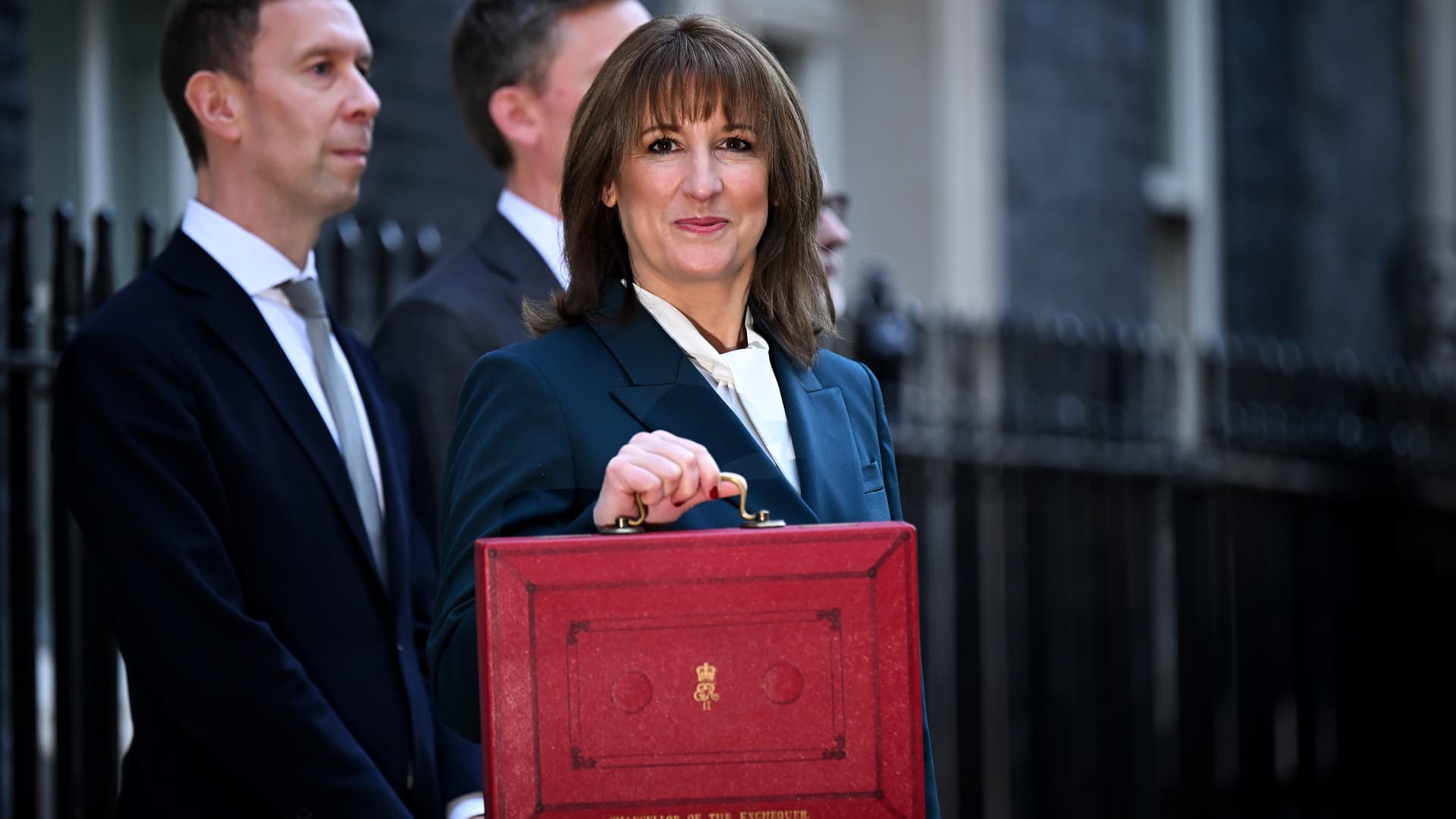
UK Chancellor of the Exchequer Rachel Reeves presented her long-awaited Autumn Budget on Wednesday, which includes tax increases that will affect most of the British population. CNBC rounds up the headline announcements for investors and talks to market watchers about the implications for UK assets. Stocks and Bonds Among the measures announced on Wednesday was a three-year exemption from stamp duty – the 0.5% tax investors pay when buying UK shares – for shares in newly listed companies. David Smith, portfolio manager at Henderson High Income, said that while the move was welcome, the government “could be more ambitious to increase the attractiveness of the UK market.” “Currently, the UK’s 0.5% stamp duty charge is an outlier among major global financial centers such as New York and Frankfurt,” he said. “It is a cost that not only reduces the value of savings but also increases the cost of equity capital for UK-listed companies, potentially leading to lower valuations.” However, the overall policy mix announced on Wednesday left many investors feeling optimistic about the outlook for tradable UK assets. Invesco’s global head of research, Benjamin Jones, argued that UK stocks currently offer “numerous opportunities”. “Compared to other regional equity markets, UK shares are still trading at low multiples which means there is still little optimism in UK domestic share prices,” he said. “The budget isn’t pleasant, but it’s not Armageddon. It doesn’t change much in the way we think about investing but removes some of the uncertainty that we think is holding back household spending and investment, and companies holding back investment and jobs.” The budget isn’t pleasant, but it’s not Armageddon Global head of research at Invesco Benjamin Jones When it comes to UK government bonds – known as gilts – Evangelia Gkeka, senior analyst for fixed income strategy at Morningstar, said the budget reinforces a “cautious yet constructive” outlook for investors. On Wednesday, gilt yields fell as the contents of the budget were accidentally leaked early by the Office for Budget Responsibility. The yield on the benchmark 10-year gilt was last seen trading 5 basis points higher at 4.479% — but Gkeka argued that the yield showed modest movement around the budget “in the grand scheme of things.” “This stability is positive for investors, reflecting a more predictable market environment and providing an attractive entry point for long-term exposure to elevated real yields,” she said. Savings and investments Tax breaks on savings are also being reformed to encourage investment in the UK market. Currently, British savers can save up to £20,000 ($26,441) a year in an ISA – a type of bank account – without paying tax on any interest earned. From April 2027, this will be reduced to £12,000 for under-65s, to encourage young people to invest rather than save. Sally Conway, a savings specialist at Shawbrook – the British lender which listed on the London market last month – said the cut to the cash ISA allowance would hit many savers. “For those focused on financial resilience and building a cash nest egg, reducing the tax-free room to save will make that job more difficult,” she said. “It will be more important than ever for people to review how their money is split between cash ISAs, standard savings accounts and, where appropriate, investment ISAs. Shopping around for competitive rates, using a mix of easy access and (fixed-term) products, and ensuring emergency savings sit in the most suitable accounts can help ease the impact of this change.” Reeves also announced Wednesday that the current tax on savings interest will increase by 2 percent in 2027. Most UK taxpayers do not pay savings tax, but for those who are liable, income tax on savings income will be 22%, a higher rate of 42% and an additional rate of 47%. Meanwhile, tax on dividends will increase in April next year. Investors in the basic and upper income tax bands will see duty on dividends rise by 2 percentage points to 8.75% and 35.75% respectively. Property The government is creating a new separate tax rate for property income, which is already subject to income tax. From April 2027, the property will have a basic rate of 22%, a higher rate of 42% and an additional rate of 47%. Apart from raising taxes on property income, a so-called “mansion tax” will be introduced in England from 2028. Homes worth more than £2 million will be liable for a new surcharge of between £2,500 and £7,500 a year, depending on the valuation given to the property. According to Fidelity, an estimated 150,000 households could be affected by the mansion tax. Oliver Loughhead, wealth manager at RBC Brewin Dolphin, advised those affected by the mansion tax to consider their options carefully. “Downsizing may be a more viable option – but it still shouldn’t be an automatic decision,” he said. “Start by calculating the expected annual cost of taxes versus the financial and lifestyle impact of moving. In some cases, the tax may be smaller than stamp duty, sales fees and the disruption involved in downsizing. (But) if your property is significantly above the threshold and you already feel like you have too much house or want to give up equity, downsizing can meaningfully reduce your long term.” Meanwhile, Nick Mann, private client property partner at law firm Collier Bristow, warned that the new tax could have unintended consequences for the wider UK real estate market. “It is likely to put off some buyers who would now consider buying below £2 million, therefore creating a two-tiered market above and below £2 million,” he said. “While the market below (the threshold) will be buoyant, it will have a significant impact on slowing down the market for properties valued at over £2 million, particularly in London and the southeast (of England).” Pensions Private pensions are also subject to tax increases, with tax breaks on salary sacrifice pension contributions to be reduced from 2029. Currently, workers enrolled in salary sacrifice pension plans can pay some of their earnings into private pensions before taxes are deducted from their paychecks — leaving them with less taxable pay. When the changes are brought in, salary sacrifice pension contributions of more than £2,000 a year will be liable to National Insurance – a form of income tax. Charlene Young, senior pensions and savings specialist at AJ Bell, said the biggest hit would be to employers. Companies had already seen their National Insurance bills rise in last year’s Autumn Budget, which businesses warned would weigh on the labor market. “While salary sacrifice currently helps workers save 8% of employee NI on the cost of their pension contributions, the savings on offer are huge for employers,” Young said in a note. “There is no upper threshold for employer NI, so they will face a 15% charge on the full value of the sacrifice contribution above the £2,000 cap. Some generous employers have previously rewarded employees by sharing all or some of their savings, but it is likely that reward schemes will be closed or withdrawn due to additional costs in the payroll.” Frances Lee, founder and director of London-based Biscuit Recruitment, called the changes to pension savings “a hit for mid-career professionals”. “Now they face a difficult choice: save for the future or protect their take-home pay. We may start to see less pension contributions to keep employees afloat from month to month,” she said. “A professional earning £45,000 to £55,000 may find that promotion gives them a slightly better discount once tax, NI and pension constraints are taken into account. It is already shaping how some candidates make their career decisions.”
What Rachel Reeves’ tax hike means for UK assets